12th July 1958: John, Paul and George make their first record

Why Percy Phillips got there before George Martin did

Percy Phillips Record by The Quarrymen
The First record made by John, Paul and George
Percy Phillips Studio
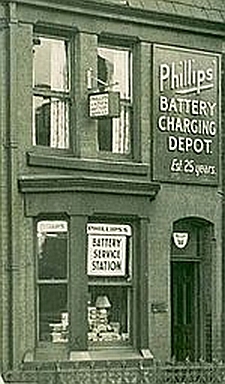
Percy Phillips’ Studio was in the back room of his house

This small studio tucked inside a Victorian terraced house at number
38, Kensington is where The Quarrymen made their first and only
demo record. It was a disc that eventually became one of the most
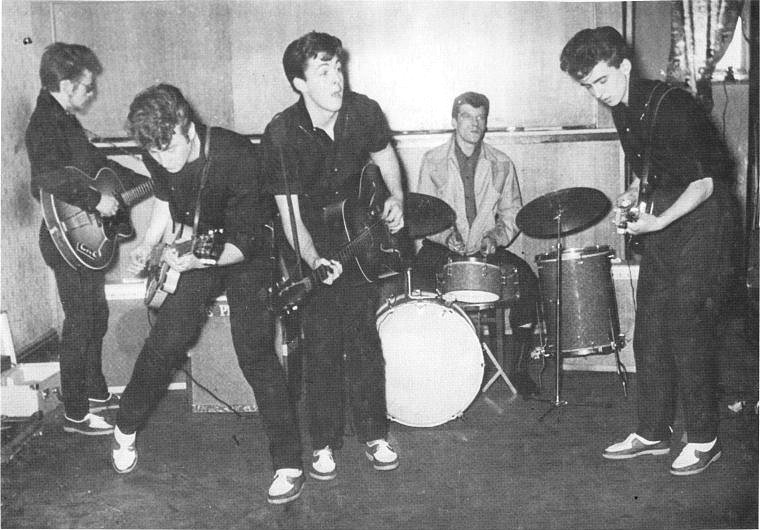
historic recordings in popular music. John, Paul, George, Colin
Hanton and John Duff Lowe paid seventeen shillings and sixpence
(87.5 pence) and cut a two-sided disk made of shellac. They couldn’t
afford to pay for a tape and so the recording was made straight to
disk.

McCartney/ Harrison Song

The five-piece ensemble recorded Buddy Holly’s “That’ll Be
The Day” and “In Spite Of All The Danger”, an original McCartney-
Harrison tune. It was seen as Paul’s song with George providing
the guitar solo.

Percy Phillips in his studio
Percy Phillips (right) in his studio

Percy Phillips owned the studio, which was on the ground floor.
His clients waited in the front parlour and recorded in the back room
studio. The studio consisted of two tape-recorders, a microphone
hanging from the ceiling, a piano and disc-cutter, which produced
these shellac discs.

Interview with Colin Hanton

Colin Hanton spoke about that famous first recording. “We met at a theatre and walked up there. All I remember was this back room with electronic equipment in the corner. We set up our equipment with me in the corner and the lads with their guitars: there were no amps, it was all-acoustic. John Lowe was over by the wall on the piano. I was hitting the drums and he said that they were too loud, so I tried again but there was still the same problem, which was finally fixed by putting a scarf over the snare to soften it and keep it as quiet as possible.

Colin Hanton of The Quarrymen

“John Duff Lowe reckons there was one microphone hanging down from the ceiling, which picked everything up. He was complaining because he said we should get the tape, which was a pound, but we just had enough each— three shillings and sixpence (17.5 pence). I always felt that was one of the reasons to invite John Lowe along to split it five ways. John and Paul went white at the thought of a pound. “Percy was fed up because we were taking too much time, and starting to look at the clock. ‘In Spite Of All The Danger’ was quite long, and he said to chop a verse off. John said no. John Lowe could see Phillips from where he was sitting and he was apparently telling John to finish. We kept going, so the record ended with the song going almost to the centre of the disc, right to the hole in the middle.

We had a record!

In Spite of all the Danger
In Spite of all the Danger by The Quarrymen

“He gave us the disc and off we went. It was a big thing. How many people had records like popular crooner, Matt Monro? So we had a record too, and could listen to ourselves. We had heard our group before because the girl who lived next door to me, Geraldine Davies, had a Grundig tape recorder. She’d record us and then we’d all sit down and listen to it. It was a momentous day for us. I can still remember it so clearly”.

The songs appeared on Anthology Disc 1.

This interview first appeared in “Liddypool“. Read the full interview in the book – get your copy here.

Liddypool
Liddypool by David Bedford

David Bedford

6th July 1957 – Part 3: John Lennon meets Paul McCartney

The Quarrymen led by John Lennon

Read Part 1 or Part 2 here

On the day John Lennon meets Paul McCartney, the meeting was about to happen. After the parade, and after Paul had watched John and The Quarrymen perform, the group was over in the church hall, preparing for the evening performance.

St Peter's Church Hall
St Peter’s Hall and Stage shortly before it was removed

Ivan Vaughan walked in with Paul McCartney, but what happened next?

Who did what? Who said what?

Since I started investigating these key moments in Beatles history, I have interviewed several people who were there at St. Peter’s Church on 6th July 1957. These include: Quarrymen Rod Davis, Eric Griffiths, Colin Hanton and Len Garry, plus eyewitnesses Julia Baird and Ian James. I have also studied the comments made by John Lennon and Paul McCartney. And guess what? Not everyone agrees on 100% of what happened! I did mention to several of them that they should have been taking notes, as the most important meeting in music history was happening, but we can excuse them!

David playing with The Quarrymen
David playing with The Quarrymen at he 50th Anniversary

What we can agree, when collating and conflating the eyewitness accounts, is that most of The Quarrymen were in the hall: Colin Hanton had gone home for tea, and Rod Davis was in the toilet for some of the time! Ivan brought Paul over to meet John, and they were talking for a short while. Paul was intrigued by how John was playing guitar. John explained that he was playing banjo chords, as taught by his mother.

He’s cack-handed!

Most of them agree that John handed Paul his guitar. The first thing Paul did was to alter the tuning, which was more than the other Quarrymen could do; tune a guitar! What astonished them, and must have looked impressive, was that Paul then turned John’s guitar upside down, because he had learned to play a right-handed guitar upside down! This was verified during an interview I did for “The Fab one hundred and Four” with Ian. Paul was left-handed (or cack-handed as we call it. Just don’t ask why!!)

Twenty Flight Rock

Paul then played “Twenty Flight Rock” by Eddie Cochran, and proved he could not only play a guitar upside-down, but he could sing too, and know a new song, including its lyrics. No wonder John was impressed! Paul also sang some of “Long Tall Sally”, not knowing how important that song was to John (that will be a future blog post).

After a short time, Paul left to go home, and John was left with the decision; should he let Paul join, even though he was better than him, but would improve the group?

John made the right decision; Paul would be invited to join, thus creating the Lennon/McCartney partnership that would change modern music.

You can see photos from the parade in “The Fab one hundred and Four”, as well as interviews and other photos too.

David Bedford

6th July 1957 – Part 2: Without Ivan, there would be NO Beatles

Ivan (left) with Pete Shotton
Ivan Vaughan (left) with Pete Shotton

How did John Lennon and Paul McCartney Meet?

Read Part 1 here

The story of how John and Paul met for the first time on 6th July is a fascinating one, because it has the strangest of coincidences connected with it.

When John moved in with his Aunt Mimi and Uncle George in 1946, the first friend he made was Ivan Vaughan, who lived in Vale Road, just behind “Mendips”. When Ivan moved from Lidderdale Infants School to Dovedale Primary School at the age of 8, he and John became even closer, even though he was a year behind John.

“THAT Lennon!”

However, with John’s reputation among the parents in Woolton, when it came for Ivan to go to Grammar School, Mr and Mrs Vaughan didn’t want their son following John to Quarry Bank! Known by parents as “THAT Lennon!”, they didn’t want their precious son, who was very intelligent, being corrupted by Lennon. And so they took the decision to send him all the way into the city centre to the Liverpool Institute.

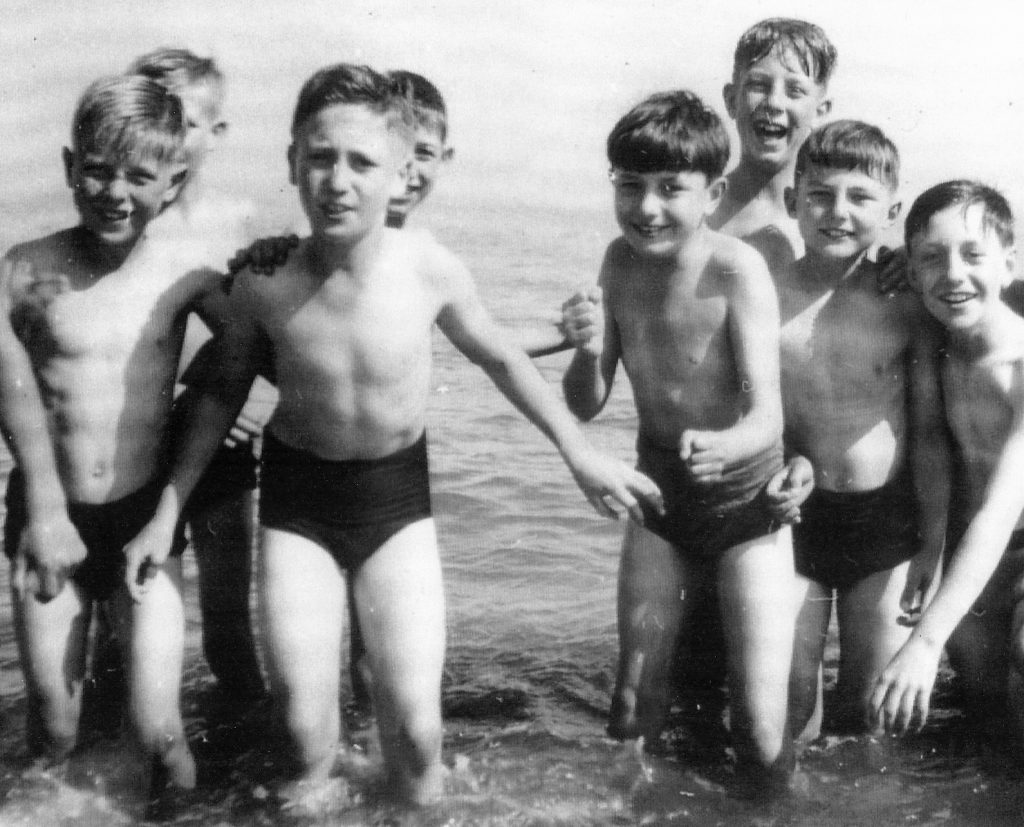
 John Lennon and Ivan Vaughan in the Isle of Man
John Lennon (second from left) and Ivan Vaughan (second from right) in the Isle of Man

The Same Birthday

At the Liverpool Institute, Ivan ended up in the same class as a lad born on exactly the same day as him; Paul McCartney. The two became friends, with a mutual interest in music, and so Ivan told Paul all about his friend’s skiffle group called The Quarrymen, which Ivan occasionally played in. He told Paul that The Quarrymen were performing at the Woolton Fete on 6th July (1957) and invited him to come along. Paul was indecisive at first, but when Ivan told him it was a good place to meet girls, how could he refuse!

John, Meet Paul

And so, on 6th July 1957, Ivan brought Paul along to St. Peter’s Church, and introduced him to John Lennon.

Without Ivan, the most important meeting in music history would never have taken place. John and Paul lived in different parts of Liverpool, went to different schools, and had different groups of friends, all apart from Ivan. And so, thanks to Mr and Mrs Vaughan wanting to keep their son away from John Lennon, they inadvertently connected John and Paul, and thus led to the birth of The Beatles.

Thank you Mr and Mrs Vaughan, and especially Ivan.

Find out more about Ivan in The Fab One Hundred and Four and in Liddypool

READ PART 3

David Bedford

6th July 1957 – Part 1: The Quarrymen on Parade

The Quarrymen in the parade
The Quarrymen, including John, on the wagon during the parade

On 6th July 1957, the day John Lennon met Paul McCartney for the first time, there was a parade around the village of Woolton. At the front of the parade was a marching band, and at the back was The Quarrymen. In the above photo, you can see that John is singing, though nobody else is doing anything!

The Quarrymen (left to right) are: Pete Shotton, Eric Griffiths, Len Garry, John Lennon, Colin Hanton and Rod Davis. The photos of the parade were taken by Rod’s father James Davis. This photo appeared in my first book, Liddypool, and was inserted at the last minute, when the book was on the printing press ready to go! We literally said; “Hold the presses!” It was the first time it had appeared in a book.

When I was working on my second book, “The Fab one hundred and Four: The Evolution of The Beatles”, I gained permission from Rod Davis to reproduce all of the photos from the parade, the only book to include all of the photographs. These include the marching band, brownies and guides, the youth group, the Rose Queen and another of The Quarrymen. They are incredible. You can get your copy of the book here.

As the parade finished, everyone left the parade, as The Quarrymen clambered down from the wagon, and walked along the side of the church to the field behind the church. In that crowd watching closely was Ivan Vaughan, and his school friend Paul McCartney. Who could have predicted what would happen this day would still be talked about all these years later.

David Bedford

Stuart Fergusson Victor Sutcliffe

Happy birthday Stuart Sutcliffe

When John and Paul realised that they needed a bass player in their group, they approached two of John’s friends, Stu Sutcliffe and Rod Murray, and offered them the position. The first one to accept would get the job, provided they had their own bass guitar.

They both welcomed the challenge, and Stuart Sutcliffe won. However, Stu has probably had more criticism than any other member of The Beatles over his talent, or perceived lack of musical ability. For decades, the memory of Stuart Sutcliffe has been tainted by those who claim that, even though he was a brilliant painter, he was not much of a musician.

How many times have you heard it said about Stuart?

Rod Murray and Stuart Sutcliffe
Rod Murray and Stuart Sutcliffe copyright Rod Murray

‘He was only in the group because he was John’s friend’.

‘He used to stand with his back to the audience’.

‘He used to play unplugged so that they couldn’t hear how bad he was playing’.

‘He looked great on stage, but he couldn’t really play’.

Stuart’s talent as a painter has never been in doubt, with a long career as an artist assured, if only he hadn’t died at the tender age of only 21.

The Real Stuart Sutcliffe

Stu with The Beatles in Hamburg

Many art experts have said that, had he lived, Stuart would have been one of the pre-eminent painters of the 1960s. On the other hand, there have been many authors and commentators who have told us repeatedly that Stuart couldn’t play the bass. I decided to speak to the people who knew him best: his sister Pauline; Art College friend and flatmate Rod Murray; friend and fellow musician Klaus Voormann; and other musicians who were there at the time.

What evidence can we find to support the claim that Stuart was a good bass player? Or will we find evidence to substantiate the opposing view that he really couldn’t play?

Stuart’s musical skills began when he started playing the piano as a young boy. “Stuart had previously been learning the piano,” said Millie Sutcliffe, Stuart’s mum. “Stuart’s father was a wonderful pianist, a classical musician, though not commercial or anything like that. He played just for his own pleasure. Stuart’s knowledge of music helped him, and he was a pretty good singer, too.”

As Stuart was learning the piano, his father Charles bought him a Spanish guitar, which he played a little, but not to any great level. This alone was not enough to give him an edge in joining the group. As his mum Millie had said, Stuart was also a good singer. He was, in fact, the head chorister at his local church of St. Gabriel’s, Huyton.

Rod Murray or Stuart Sutcliffe – the Bass Race

Rod Murray with the bass guitar he started to make

When John, Paul and George needed a bass player, they offered the position to Stuart and his flatmate Rod Murray. Neither could afford to buy one, so Rod, also at Art College, designed and started to make his own bass guitar.

Stuart’s painting was purchased at an exhibition in the Walker Art Gallery. The exhibition ran from 19 November 1959 to 17 January 1960 and, contrary to some reports, Stuart did not win the competition. However, John Moores, who sponsored the competition, purchased Stuart’s painting, giving him the money to buy the bass guitar. Rod still has his part-made bass guitar, and told me all about it in my interview for The Fab one hundred and Four.

Learning Bass

Admittedly, when Stuart purchased his bass guitar, he couldn’t play it. But as a natural musician, and under the tutelage of musician David May, he soon picked it up.

Hamburg – Howie, Dick and Klaus

In order to provide continuous music, Koschmider split up The Beatles and The Seniors, giving Howie Casey the chance to assess Stuart’s competence as a bass player up close. “I was given Stuart Sutcliffe along with Derry and Stan Foster from the Seniors, and we had a German drummer. Stu had a great live style,” he recalled. (Fab one hundred and Four)

Rick Hardy of The Jets also witnessed Sutcliffe at close hand in Hamburg. “Stu never turned his back on stage,” he said emphatically. “Stu certainly played to the audience and he certainly played bass. If you have someone who can’t play the instrument properly, you have no bass sound. There were two rhythm guitarists with The Beatles and if one of them couldn’t play, you wouldn’t have noticed it – but it’s different with a bass guitar. I was there and I can say quite definitely that Stuart never did a show in which he was not facing the audience.”

One of those who became very close to Stuart in Hamburg was Klaus Voormann, who himself became a great bassist respected the world over. “Stu was a really good rock and roll bass player,” said Voormann, “a very basic bass player. He was, at the time, my favourite bass player, and he had that cool look. The Beatles were best when Stuart was still in the band. To me it had more balls. It was even more rock and roll when Stuart was playing the bass and Paul was playing piano or another guitar. The band was, somehow, as a rock and roll band, more complete.”

Pete Best on Stuart

In a rock ‘n’ roll band, the rhythm is driven by the drums and bass guitar working closely together, so the opinion of The Beatles’ drummer, Pete Best, is an important contribution to this debate. ”Stu was a good bass player,” Pete said. “I’ve read so many people putting him down for his bass playing. I’d like to set that one straight. His bass playing was a lot better than people give him credit for. He knew what his limits were. What he did was accept that and he gave 200%. He was the smallest Beatle with the biggest heart.” (quote from interview for Liddypool).

The Bats

After he’d left The Beatles, not long before his death, Stuart was asked to play with a German group, The Bats. He borrowed his old bass guitar from Klaus Voormann (who had recently purchased it from Stuart) and played with The Bats at the Hamburg Art School Carnival and the Kaiserkeller.

Hopefully, that puts the argument to an end. Stu could play bass!

Stuart Sutcliffe
Stuart Sutcliffe

Stuart brought style, image and a fashion-sense to make The Beatles look cool on stage. He was a great and talented artist too. But he was more than that; he was a good bass player, at a time when John Lennon said The Beatles were at their best. John always remembered his friend; “I looked up to Stu, I depended on him to tell me the truth.”

Read the full story, plus my interview with Rod Murray in “The Fab one hundred and Four“.

Stuart Sutcliffe Fan Club

For the last few years, it has been my privilege to help run the official Stuart Sutcliffe Fan Club on behalf of the family. Join us for free and get updates on events etc to do with Stuart. You can also see examples of his artwork online as well.

HAPPY BIRTHDAY STUART SUTCLIFFE

David Bedford

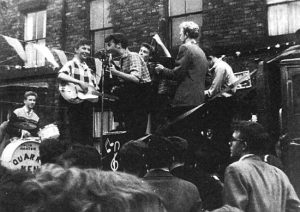
22nd June 1957: Charlie Roberts photographs The Quarrymen!

The Quarrymen
The First photo of The Quarrymen

When you’ve been researching The Beatles for nearly 20 years like I have, there aren’t many things that can surprise me. Having gone to Ringo’s school in the Dingle, and lived near Penny Lane for 30 years; my three daughters were born in the same hospital as John Lennon, and attended the same primary/ elementary school as John and George. But there was one surprise waiting for me when I spoke to Charlie Roberts.

Meet Charlie Roberts

Charlie Roberts
Charlie Roberts

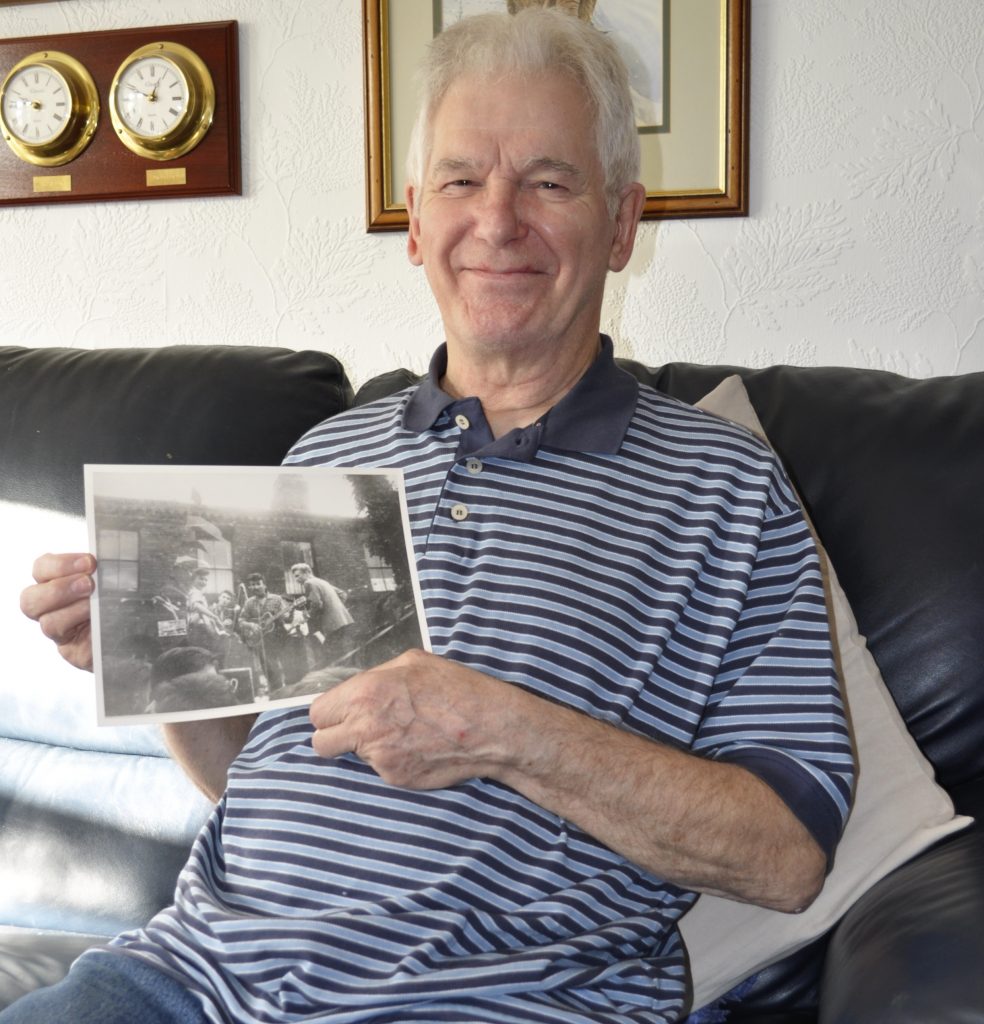
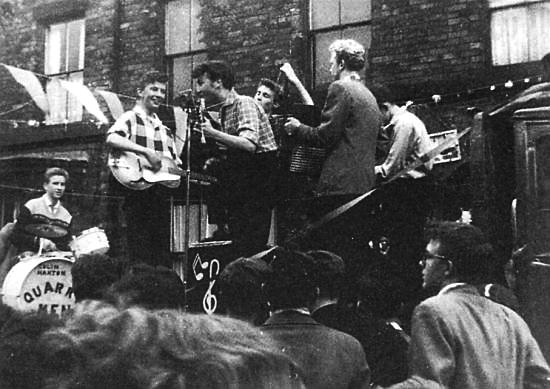
Charlie decided to ask his friend Colin Hanton’s group The Quarrymen to perform in his street in Toxteth; Rosebery Street. The occasion was the 750th anniversary of the founding of Liverpool in 1207. Charlie thought that a skiffle group would add some great fun to the celebrations. Not only did he invite The Quarrymen, but when he borrowed a little camera and took a few photos. These turned out to be the very first photos ever taken of John Lennon performing with The Quarrymen.

The Quarrymen by Charlie Roberts

“At that time,” remarked Charlie, “The Quarrymen would play anywhere for free, because they were doing it for fun. They became more serious after Paul joined, and maybe John was taking it serious, but it was really just friends having some fun. They all turned up, and set themselves up on the back of a wagon that Fred Tyler had brought along. He also wired up a speaker system so that they had something for the microphones, so they made quite a loud noise, which was good.”

The Quarrymen (2) by Charlie Roberts

“I thought they were great, playing good music and entertaining. When you compare them to other bands, I suppose they weren’t that good, but I enjoyed listening to them, and so did the crowd “I can’t remember what songs they played, but it was good fun. The street was decorated with bunting, and we had sandwiches and drinks, and had a good time.”

The Quarry men (3) by Charlie Roberts

John Lennon causing trouble!

“There was an incident involving John, who seemed to upset some of the lads in the crowd. I think he had been winking at some of the girls, and it became obvious that there could be trouble, so as soon as they finished, they grabbed their instruments, and ran into my mum’s house. Some reports have said that the police came and escorted them to the bus stop, but The Quarrymen just stayed in our house for about an hour, and then after everyone had gone, they went home.”

“The party was such a success,” said Charlie, “that the City Council awarded us a prize for the best decorated street, and so the following week we had a second party, with entertainment provided by The Merseysippi Jazz Band, all paid for by the City Council, which was great.”

Charlie followed The Quarrymen to many of the venues they played, like Wilson Hall in Garston, where one particular incident sticks in his memory. “I remember Wilson Hall, when we all had to suddenly run away after the performance. I don’t know who started it or what it was about, but everyone legged it! I was okay, because I hadn’t been performing, so nobody knew me, but the others had to run. The first thing to discard was the tea-chest bass, which was too big and heavy to run with.”

The Quarrymen often went to “Barneys”, the club at St. Barnabas Church Hall. But, like most venues, alcohol was not available. “We used to meet in the Rose of Mossley pub on Rose Lane,” recalled Charlie, “and then we would go on to “Barneys”. We all had to wear proper suits and ties to get in there. After “Barneys” closed, we would then go to the Dutch Café on Smithdown Road, which was open late, one of the few places still open into the early hours of the morning.”

Cement in the Lock!

One of Charlie’s funniest memories takes place in an area called Ford to the north of Liverpool: “The Quarrymen had been booked to play at a party, and so we all travelled up there on the bus as usual. However, the party was in a house, and so there was not much room for the boys to play. By the time they had realised what time it was, the last bus had gone, and so they all decided to stay the night in the house. At some point, John and Paul went out for cigarettes, and there were obviously road works nearby, because they returned with a warning lamp they’d picked up. Everything went quiet, but when we tried to go home, we went to open the door, but somebody had put cement into the door lock! Nobody admitted doing it, but we all had our suspicions, because only John and Paul had been out. So, we all just left through the back door and said nothing.”

Charlie with his Photograph

Charlie also talked about driving around with his friend Arthur Wong.

“Arthur’s dad had a very good business,” Charlie recalled, “and so Arthur had a Vauxhall Cresta PA, a great car with fins, two-tone paint, very much like the American cars. We used to drive around, and I clearly remember John and Paul on the back seat of the car, with Paul trying to master ‘Raunchy’. We had a great time driving around in it with Arthur and we would often end up at Arthur’s home at 42, Heydale Road, in Mossley Hill.”

John Lennon Played in My Road?

And that is where the coincidence comes in! Because, since 1989, I have lived in Heydale Road! And when we moved into this road, Mrs Wong still lived in 42, Heydale Road. As you can see, wherever I go, I am surrounded by The Beatles! A few years ago, I was giving a talk at the Liverpool History Show, and a man came up to me and wanted to see my book, The Fab one hundred and Four: The Evolution of The Beatles. Why? Because he was Arthur Wong’s brother, and told me how he remembered Charlie and friends hanging out with them. Small world this Beatle world isn’t it?

The Fab one hundred and Four – ONLY £25

There are more great stories from Charlie in The Fab one hundred and Four, along with those other important people who played a part in Beatles history.

And if that isn’t enough Charlie for you, he now has his own book about his life, and hanging out with The Quarrymen and The Beatles; Just Like Starting Over; John and The Quarrymen, My Teenage Years.

David Bedford

Home – Liddypool Dave

Liddypool Logo
Liddypool Logo

David Bedford’s fascination for Beatles History is shown in his books “Liddypool” (2009) and “The Fab one hundred and Four: The Evolution of The Beatles” (2013). He has also published his latest book about The Beatles drummers with Garry Popper, “Finding the Fourth Beatle” (2018).

David Bedford, Beatles author and researcher of Beatles history
David Bedford

He collaborated with the Beatles’ only official biographer Hunter Davies on “The Beatles Book” (2016), and is working on a number of new projects.

David began writing for the London Beatles Fan Club, which became the British Beatles Fan Club

THE QUARRYMEN

In 2023, David was invited to join John Lennon’s Original Quarrymen and has now played with them in Liverpool, Germany, Austria and a recent trip to Brazil in January 2025.

David playing with The Quarrymen in Brazil

NEW BOOKS

The new book for 2025 is The Beatles: What If? written with his friend Andrew Phillips, looking at those key times in Beatles history when things could have worked out very differently.

The Beatles: What If?

The Beatles Fab Four Cities, co-written with Richard Porter and Susan Ryan, tells the story of the four cities that defined The Beatles career: Liverpool, Hamburg, London and New York. BUY IT HERE

The Beatles Fab Four Cities

Bill Zygmant: Where Did You Get That Shirt? is also new out. David has spent the last 3 years working with ’60s photographer Bill Zygmant putting together a book of his photos, which include over 70 of John Lennon and The Beatles. BUY IT HERE

Bill Zygmant: Where Did You Get That Shirt?

The Country of Liverpool (2020). David digs into the country music roots of Liverpool and, never told before, the country roots of The Beatles.

The Country of Liverpool

Beatles History

Liddypool Birthplace of The Beatles by David Bedford
Liddypool by David Bedford

David’s website aims to chart Beatles History through his interviews and research that have contributed to his books. Simply select Beatles History and either look at the main page, or select the appropriate year in Beatles History. This will be added to regularly to build a unique insight into Early Beatles and Quarrymen history.

inspector rocke

Inspector Rocke by David Bedford
Inspector Rocke

In a branch off The Beatles trail, David has published his first crime detective novel, Inspector Rocke, which is set in Liverpool, 1960, and features The Beatles too!

Beatles Detective

The Beatles Detective looking at The Beatles History
The Beatles Detective

Because of his forensic way of analysing Beatles history, in 2019, he launched a new Blog called “The Beatles Detective”, where he examines aspects of Beatles history, and searches for the evidence to solve the mysteries, like The Beatles names, Beatles members and other Beatles history. You can follow that at Thebeatlesdetective.com

He was Associate Producer and Historian on the documentary “Looking for Lennon” (2018), which was nominated for a National Film Award, and the archive Producer for “No Hamburg No Beatles” (2025), a TV documentary.

In 2025, he was the script advisor for the play, “Shake It Up Baby!” which had its premiere in Liverpool at the Epstein Theatre.

David is a Beatles historian, author and researcher, and a guest at Beatles events in the US, UK and Europe. He makes regular appearances on Radio, TV and Beatles Podcasts.

“David is defining and refining Beatles history” – Edd Raineri, Beatledd Fab Four Hour

Beatles Historian and Researcher: Discoveries

As well as many interviews with people connected with The Beatles, David’s original research has uncovered people, stories and events that no other author/historian has discovered:

The only book on The Beatles and Liverpool (Liddypool)

The real meaning behind the Beatles song “Penny Lane(Liddypool)

Discovered Geoff Lee, who suggested to John Lennon that he should start a skiffle group; The Quarry Men (Fab104)

Fab one hundred and Four: The Evolution of The Beatles, Beatles members and Beetles names
The Fab one hundred and Four

Has the only biography and photographs of Beatles drummer Norman Chapman; (Fab104)

The most complete biography of Silver Beatles drummer Tommy Moore; (Finding the Fourth Beatle)

Established that George Harrison joined The Quarrymen in December 1957, not 1958; (Fab104)

Established when the first colour photograph of John, Paul and George was taken; (Fab104)

Discovered who the “man on the flaming pie” was (Fab104)

Drummer Alan Leyland drummed with The Beatles in 1961; (Finding the Fourth Beatle)

That John Lennon, Paul McCartney, George Harrison and Pete Best signed a legal partnership agreement in 1961; (Finding the Fourth Beatle)

That Pete Best WAS NOT sacked and what really happened; (Finding the Fourth Beatle)

That The Beatles were not under contract at EMI in June 1962. (Finding the Fourth Beatle)

The between 1956 and 1970, 23 different drummers played with The Beatles at different times. (Finding the Fourth Beatle)

And much, much more, with many interviews being unique to him too.

Purchase David’s books in the Beatles Bookstore

David's Social Media
David’s Social Media

FACEBOOK FEED

[fts_facebook type=page id=223301798194473 posts=6 description=yes posts_displayed=page_only]

8 Days A Week (I Ain’t Got Nothing But..)

The film was a huge disappointment to me. Some nice footage, and bits of commentary from Paul and Ringo, but this was not a film for serious die-hard Beatles fans.

When we were told a couple of years ago that The Beatles were going to be captured in a new, fresh, exciting film, directed by the legendary director Ron Howard, there was great excitement among Beatles fans.
We were promised new footage, new photos, behind the scenes interviews and the first truly new Beatles film since the 1960s.
I attended the world premiere in Liverpool – we were screening 30 minutes ahead of London – and I walked the “blue jay way” carpet with Allan Williams, The Quarrymen, Julia Baird and many more, which was an honour. In the cinema, when we watched interviews with Allan and Beryl Williams, Joe Flannery, Freda Kelly and other Liverpool people, I was so pleased that the film started with the Beatles in Liverpool.
However, when that finished after 20 minutes, I realised something was not quite as it seemed. This film was only for us in Liverpool. Ron Howard, Paul McCartney and Ringo Starr appeared on the screens with a special intro for us, where Ron Howard aditted he hadn’t been to Liverpool but he would like to. Seriously? But then as Liverpool wasn’t to feature in the main film, I suppose it didn’t matter. Where were The Beatles from? Ermmm. Where were The Quarrymen? Stuart Sutcliffe? Pete Best, who probably played more hours live with The Beatles than Ringo, but no mention.
The film was a huge disappointment to me. Some nice footage, and bits of commentary from Paul and Ringo, but this was not a film for serious die-hard Beatles fans, but a nice trip through the Beatles touring years. The one thing it did show well was how fed up with touring the Beatles were by 1966. That was about it. There was nothing particularly new, and plenty I’d seen elsewhere and so much more they could have included, but didn’t.
There was no new insight into touring with The Beatles, and, as a Liverpudlian, this film was definitely made for the American market. Even when a clip was shown of The Beatles on the balcony in Liverpool in July 1964, there was no caption to tell you where it was, even though virtually everywhere else was captioned. When they showed The Beatles in Amsterdam in June 1964, there was Jimmie Nicol standing in for Ringo, but he was not name-checked or identified and just passed over to when Ringo rejoined the tour.
Oh, and I nearly forgot. The people they interviewed. Not ordinary fans, but they rolled out celebrities! Of course, the famous “Fifth Beatles” Richard Curtis, Eddie Izzard, Jon Savage, Whoopi Goldberg, Sigourney Weaver…………………Yes, right.
I could go on, because there were so many disappointments there’s not enough space! This was a huge opportunity missed.
Would I pay to see it again? No.
Would I recommend it to others? No.
Will I buy it on DVD? Probably not.
Was I disappointed? Definitely.
I ain’t got nothing but disappointment, babe, Eight Days A Week.
David Bedford

How John Lennon and Pete Shotton robbed a house for a tea-chest bass!

Bill Smith, Pete Shotton, John Lennon, Don Beattie and Michael Hill

In the first look at the Fab 104, we examined the impact and importance of George Smith, Julia Lennon and, of course, harmonica tutor Arthur Pendleton. This time we look at the founding members of The Quarrymen: John Lennon, Pete Shotton and Bill Smith.
In a rare interview, Bill Smith told me where they formed the group and how they came up with the name, The Quarrymen – and who didn’t like the suggestion! They may look innocent, but in the photo we see, from left to right, Bill Smith, Pete Shotton, John Lennon, Don Beattie and Michael Hill (more on the latter two guys later). Bill also told me why his collar is up, and the story behind the hairstyles. Bill was the first tea-chest bass player with the group, but when he left the group, Lennon and Shotton broke into Bill’s house and stole it! But Bill took it back! Read Bill’s story in “The Fab One Hundred and Four: The Evolution of The Beatles” at www.fab104.com
David Bedford
The Beatles: You Tell Me That It’s Evolution, well, you know…………or do you?

Could you tell someone how they went from the Quarrymen to the Beatles? I started researching it and therefore started writing “The FAB one hundred and Four: The Evolution of The Beatles”. And I was amazed – there were 104 people! I went looking for the musicians who played with every incarnation of the group, plus those who taught The Beatles to play, and those who played a significant part in the evolution of the Beatles, from the first Fab Four: John Lennon, Pete Shotton, Bill Smith and Eric Griffiths, to the famous Fab Four: John, Paul, George and Ringo.
Follow me on a journey from the very start of The Beatles to the end of 1962 when Ringo Starr had become the final piece of the jigsaw in the Fab Four.
It all started with John Lennon, and in particular, the influence of his mum Julia. Having been separated from his mother at the age of 5, he reconnected with her in his early teens, and she became a major instigator in Lennon’s musical journey. As Julia played banjo, ukulele and piano there was always music in the house, and she encouraged her son with his musical ambitions.
However, once he had a guitar, because he couldn’t play it or tune it properly, John tuned his guitar to his mother’s banjo, and so learned to play only banjo chords on his guitar. When he met Paul on 6th July 1957, he was playing banjo chords, which confused the young McCartney.
Julia also wanted to encourage him to learn to play the harmonica that his uncle George had given him. Julia’s neighbour, Arthur Pendleton, was a keen harmonica player, and so Julia sent young John to take lessons from Arthur. Those lessons, and not lessons from Delbert McLinton, helped to form the distinctive sound that caught the ear of George Martin, and underpinned the Beatles’ first hit singles.
Next time: how John acquired his first guitar.
For more information go to www.fab104.com
David Bedford

Arthur Pendleton who taught John to play harmonica

To purchase David's books, go to CLICK HERE
RSS
Follow by Email
Instagram