On 20th May I flew out to Germany with Rod Davis from the Quarrymen.
Rod, like many people, didn’t realise that I play guitar and sing a bit too! So he suggested that ge would do a talk with songs, I would do my talk, and then we would sing some songs together. What an honour that was for me and we had so much fun too!!
Have a look at the video I’ve just uploaded to our YouTube channel and I hope you forgive the camera work from those watching and my singing too!
George Harrison said, “No Lonnie Donegan, no Beatles” and he was right. It was Lonnie who started the skiffle craze and got John Lennon to start The Quarrymen, which started the Beatles!
Here are the Quarrymen performing “Rock Island Line”
Although St. PETER’S Church is famous for being the place where John Lennon met Paul McCartney on 6th July 1957, John had been attending Sunday School here from the age of 5. Many of his friends from The Quarrymen also attended here too.
John, his best friends Pete Shotton and Nigel Walley also sang in the choir, though it won’t surprise you that John was thrown out of the choir too!
Join me as I go through the doors and into the church to see inside the famous St Peter’s where John sang in the choir
In our latest Video on YouTube we are sharing some of the unseen footage and interviews from when we made “Looking for Lennon”.
Not many visitors to Liverpool realise that in the heart of Woolton, close to John Lennon’s home at “Mendips”, was a Quarry. This was still active in the 1950s. When the Quarrymen performed at the St Peter’s Garden Fete, they played on top of the Quarry.
You can view some drone footage (see photo) that we shot in the quarry – it is a residential area now – which looks over St Peter’s Church and the footpath, which many people also don’t know about, that runs from Lennon’s side of Woolton to St. Peter’s Church.
Walk in the footsteps of John Lennon and The Quarrymen. Enjoy the short film – more to come soon
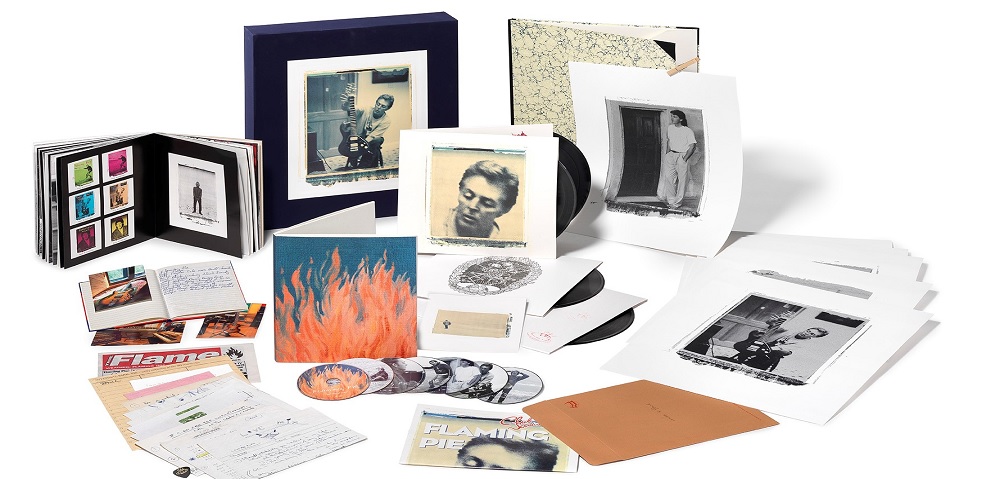
Paul McCartney’s 10th studio album, Flaming Pie, was released in 1997 and one of his best albums, in my opinion. In 2020, it is about to be reissued with a deluxe boxset.
Changing Names – from beetles to beatles
When John Lennon, Paul McCartney and George Harrison decided they had had enough of the name “Quarrymen”, it was their latest recruit, Stuart Sutcliffe, who suggested a new name. In tribute to their hero Buddy Holly, whose group was called The Crickets, Stuart suggested “Beetles”. But how would it be spelled? In 1960, the group used many spellings, and variations, of the name Beetles. Interestingly, before calling themselves The Crickets, Holly’s group considered the name “Beetles” too. (Fab one hundred and Four)
the Beetles “Myth”
One often quoted myth can be debunked, which was quoted by George Harrison. The name was not inspired by the 1953 Marlon Brando film The Wild One, which refers to the rival gang led by Lee Marvin as “The Beetles”. The film was banned in England by the British Board of Film Censors until 1968.
The Man on the Flaming Pie?
So what about the “Man on the Flaming Pie”? Although Paul McCartney had an album and a song; “I’m the Man on the Flaming Pie”, he wasn’t. On Page 2 of the first issue of Bill Harry’s Mersey Beat, John Lennon wrote his biography of the origins of the group, which Bill Harry titled “Being a Short Diversion on the Origins of Beatles (Translated from The John Lennon).”
In it, Lennon wrote:
“Many people ask what are Beatles? Why Beatles? Ugh, Beatles, how did the name arrive? So we will tell you. It came in a vision – a man appeared on a flaming pie and said unto them ‘From this day on you are Beatles with an ‘A’. Thank you, mister man, they said, thanking him.“
Meet the real “Man on the Flaming Pie”
For years, many have scoffed at this as a bit of fun. However, there is a true story behind the “man on the flaming pie”, as detailed in The Fab one hundred and Four. His name is Royston Ellis, and he was a Beat Poet who visited Liverpool, and was backed by a group, known as The Beetles, at Liverpool University. I interviewed him for the book, and he told me the story of what happened in Gambier Terrace, looking every bit like a Beatnik paradise. He sat there with John, Paul, George, and Stu, and discussed the possibility of them coming back down to London to back him as a beat group.
While there, they had an experience with a drug, of sorts, remembered by John later:
Royston Ellis
‘By the way, the first dope, from a Benzedrine inhaler, was given to The Beatles (John, George, Paul and Stuart) by an (in retrospect) obviously ‘English cover version of Allen – one Royston Ellis, known as beat-poet (he read poetry whilst we played 12-bar blues at the local in-place!). So give the saint his due. Love, John Lennon
Record Mirror mentioning The Beetles
Whether it was under the influence of “Vicks” or not, Royston Ellis and John Lennon had a discussion about their group’s name. In a newspaper report, Ellis refers to the group The Beetles, and how he is hoping to bring them down to London as his backing group. “John and George liked the idea, though Paul and Stu were less keen.”
Beetles with an “A”
“I suggested that since they liked the beat scene and they were coming to London to back me, a beat poet, why not spell it with an ‘A’? I had bought a chicken pie and mushrooms for dinner. I might have had the money but I did not know much about cooking, and the result was that I overcooked the mushrooms and burnt the chicken pie. I have always assumed that gave rise to John’s reference to ‘a man on a flaming pie’ suggesting they call themselves Beatles with an A.” (Fab one hundred and Four)
And very soon afterward, they settled on Beatles with an “A”, never to be changed. On 15th August 1960, Allan Williams booked the group to play at the Jacaranda, now with a settled lineup of John, Paul, George, Stuart, and Pete, and John introduced themselves as The Beatles. They were now and forever will be known as The Beatles with an “A”.
“In 1964, The Beatles created entire LP, Beatles for Sale, as a homage to their life-long love of country music. But how did this connection to musicians such as Carl Perkins begin? It began in The Country of Liverpool! And here, in exciting and accurate detail, David Bedford walks us through the Liverpool-link to The Beatles’ country and western vibes. Known for his detailed research and passion for “getting things right,” Bedford unfolds yet another dimension in The Beatles’ story that has long been overlooked. This book is a must-read for Beatles fans and scholars alike. I loved it!”