Pete Best was NOT Sacked by Brian Epstein or The Beatles

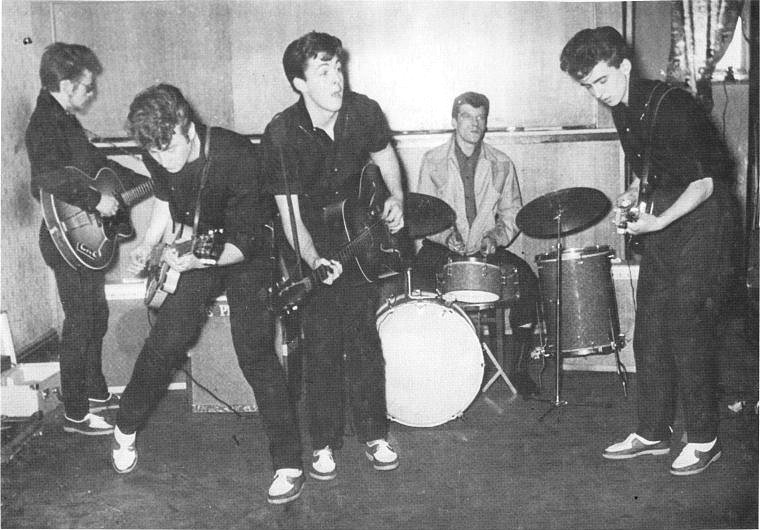
The Beatles in Hamburg: John Lennon, George Harrison, Pete Best, Paul McCartney and Stuart Sutcliffe

Pete Best and the biggest Beatles Mystery

Since 1962, one of the hottest debates has centered around Brian Epstein’s dismissal of Pete Best from The Beatles. The controversy has inspired articles, chapters and even entire books, all speculating on the reasons why the band booted Pete from the group as they were on the cusp of stardom. However, we have been looking at this most well-known chapter in Beatles history the wrong way.  To being with, let’s go back to the infamous head-to-head meeting that took place on this day in 1962.

Beatles Change Drummer is how Mersey Beat announced that Pete Best had left The Beatles

Brian Epstein summoned Pete Best to NEMS on 16th August 1962. Although Pete thought it was to be a routine meeting, it would in fact go on to define his life thereafter. Even though we will demonstrate that Brian did not dismiss Pete, this does not mean that either Pete or Brian have ever lied about what went on that day. Both of them have since given consistent accounts over the years. After nervously exchanging some small talk, Brian then uttered those fateful words:

“the boys want you out”

I don’t know how to tell you this, but the boys want you out and it has already been agreed that Ringo is joining on Saturday.”

Pete recalled what happened next. “Only one echoed through my mind. Why, why, why? ‘They don’t think you’re a good enough drummer, Pete,’ Brian went on. ‘And George Martin doesn’t think you’re a good enough drummer.’ ‘I consider myself as good, if not better, than Ringo,’ I could hear myself saying.

does ringo know yet?

Beatles manager Brian Epstein
Beatles Manager Brian Epstein

“Then I asked: ‘Does Ringo knew about this yet?’ ‘He’s joining on Saturday,’ Eppy said.

” A conspiracy had clearly been going on for some time behind my back, but not one of the other Beatles could find the courage to tell me. The stab in the back had been left to Brian, and it had been left until almost the last minute. Even Ringo had been a party to it, someone else I had considered to be a pal until this momentous day.”

The meeting continued. “Epstein went on to what for him was simply next business at this shattering meeting. ‘We still have a couple of venues left before Ringo joins – will you play?’ ‘Yes,’ I nodded, not really knowing what I was saying, for my mind was in a turmoil. How could this happen to me? “

“Why had it taken two years for John Lennon, Paul McCartney and George Harrison to decide that my drumming was not of a high enough standard for them? Dazed, I made my way out of Brian’s office. Downstairs, Neil was waiting for me. ‘What’s happened?’ he asked as soon as he saw me, ‘you look as if you’ve seen a ghost.’” Pete walked straight past Billy Kinsley and Tony Crane of The Merseybeats, the group Brian was hoping Pete would join.”

Delving into the technicalities

We have to carefully look at, and challenge, every piece of available evidence, and consider the following statements:

  • Brian Epstein sacked Pete Best – the accepted truth since 1962
  • John, Paul, and George had hired Pete in the first place, and therefore they could fire him too

Definition of Dismissal: “Dismissal (referred to informally as firing or sacking) is the termination of employment by an employer against the will of an employee.” 

Pete Best was not an employee, so Brian couldn’t sack him. John, Paul and George couldn’t sack him either. In fact, Pete was a self-employed musician, so couldn’t be sacked by anybody.

Brian had to choose his words carefully

Now we know that Brian didn’t sack Pete, we have to examine what really happened.

The reason Brian used those exact words, “the boys want you out and it has already been agreed that Ringo is joining on Saturday” was not accidental; he chose those words very carefully.

Brian, as we know, was terribly nervous about the meeting, as Pete Best observed. It was because Brian knew he had to get the wording right, or it could have had dire consequences. Brian had to communicate Pete that he was sacking and replacing him, without saying those words.

Getting rid of Pete was not an easy matter. When he joined The Beatles, it was as an equal member, and therefore they became a partnership. The Beatles of John, Paul, George and Pete signed that Partnership Agreement at the end of 1961.

Another notable piece of evidence is the management contract that John, Paul, George and Pete signed as members of The Beatles. Brian hadn’t signed the contract. If Pete Best was simply a “hired hand”, then the contract would not have included him. The four Beatles were performing as a group, as a partnership.

No member of that partnership could fire another member. There needed to be a complex examination of the legal partnership among The Beatles and that management contract. Epstein needed the help of his solicitor, David Harris, to find a way to follow the instructions of John, Paul and George to get rid of Pete Best from The Beatles.

interview with Brian Epstein’s lawyer

Brian Epstein's lawyer, David Harris, who confirmed that Pete Best was not sacked
Brian Epstein’s lawyer, David Harris, who confirmed that Pete Best was not sacked

“Best wasn’t employed by Brian,” said Harris, “he was in partnership with the other three Beatles, and they had a partnership as a group known as ‘The Beatles’. Their partnership didn’t have to be in writing – not all contracts have to be in writing – but in general terms, a contract doesn’t have to be in writing. It can be verbal, like buying something in a shop. Same with this informal partnership agreement where they would work together as a group and share their profits. They could have agreed among themselves that they could divide the profits between themselves in any way they wanted.” What Harris didn’t know at the time is that The Beatles had a formal partnership agreement arranged in December 1961.

Brian had no authority to get rid of Pete

Finding the Fourth Beatle the story of the 23 drummers who put the beat into The Beatles

“The problem was,” said Harris, “that it was a Partnership. Brian had no authority to get rid of Pete. They (the other three Beatles) had to get rid of him, and dissolve the partnership. Brian could say that Ringo was replacing Pete.

I wrote a letter saying Brian would happily place him (Pete) in another group, as that was in his character anyway. He couldn’t sack him. The personal relationships didn’t suggest it, but the legal relationship did, that Pete was engaging Brian to provide work for him.” Pete and the other Beatles, in a legal context, employed Brian Epstein.

Finding the Fourth Beatle

Brian Epstein, on behalf of The Beatles, had already approached Bobby Graham, Ritchie Galvin and would also ask Johnny Hutchinson later this same day, but he had already lined up the young Ringo Starr. The rest, as they say, is history.

Read the full interview with Brian’s lawyer, David Harris, in Finding the Fourth Beatle.

David Bedford

Follow Liddypool on Facebook for more articles like this.

How Ringo Starr became the Beatles Drummer – In His Own Words

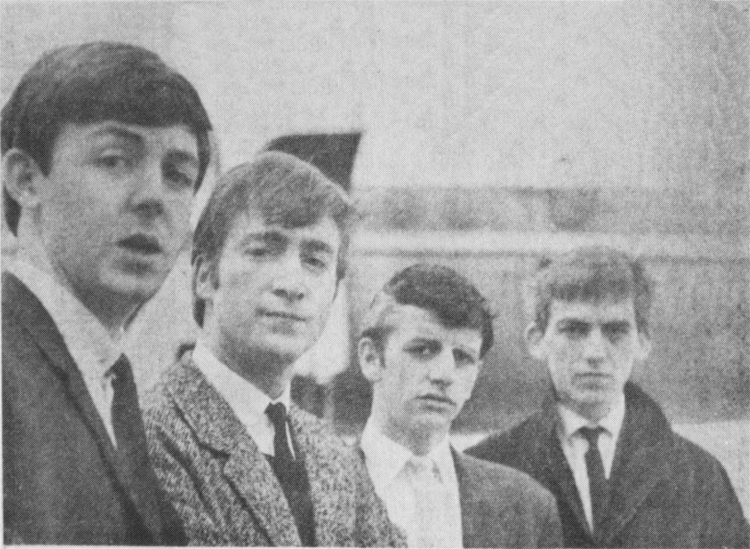
The Fab Four - George, John, Ringo and Paul. This was Ringo's first photo shoot after he became The Beatles drummer
The Fab Four – George, John, Ringo and Paul

Ringo becomes The Beatles drummer

Over the years, the story of how Ringo Starr became The Beatles drummer has been told in so many ways. It has taken on mythical proportions and so created an amalgam of scenarios that, if you look hard enough, is the truth. We have to investigate and piece the events together as best we can with exact times and dates. As more “facts” emerge, it retells more versions of the events, confusing the story even further.

Ringo sits in with The Beatles for Pete Best

No evidence exists to show that The Beatles offered Ringo the drumming job in The Beatles before August 1962. On the few occasions when Pete Best couldn’t make it, Ringo was their go-to drummer. This meant that they got to know each other a little better, musically. They first made a record together in Hamburg back in October 1960. Ringo next sat in with The Beatles was at their Christmas Party on 27th December 1961. On this occasion, Best had asked him to play in his place.

The Beatles at the Cavern - Pete, George, John and Paul. Ringo replaced Pete Best as The Beatles drummer
The Beatles at the Cavern – Pete, George, John and Paul

Ringo also played on 5th February at the Cavern, plus 26th March at The Cavern at lunchtime. He then joined them at the Kingsway Club in Southport in the evening. They knew what he was like to play with, and enjoyed playing with him in the group. This must have been a significant factor.

Examining The Evidence

Although some suggest that it would always be Ringo, the evidence says otherwise. Whatever transpired before Ringo Starr became The Beatles drummer, he was the right choice.

How did it happen? How did Ringo become the Beatles drummer? The Fourth Beatle? There are countless stories and multiple, often conflicting, versions of events. What does the evidence tell us?

Ringo explains how he joined The Beatles

In November 1962, Ringo told music journalist Chris Hutchins of the New Musical Express how he became The Beatles drummer. This interview, complete with relevant times, dates and locations, took place just three months after Ringo had joined the group. This interview appeared in my book, The Fab One Hundred and Four: The Evolution of The Beatles.

Ringo sat in with The Beatles on four occasions over the previous year, with conversations about him joining the group. There is no evidence that The Beatles offered Ringo the job before the weekend of 10th August 1962. In the interview, Ringo made no allusions to this, even a short time after joining them. The evidence only supports Ringo’s version.  

Friday, 10th August 1962: 10, Admiral Grove

John and Paul asked George to contact Ringo to invite him to join The Beatles.

 Richy (Ringo) with his mother, Elsie. From playing the accordian, he became The Beatles drummer
Young Richy (Ringo) with his mother, Elsie

In an interview with Mersey Beat, Ringo’s mother Elsie recalled this as the first time she had met George Harrison. She explained why he had called. “Ringo was at Butlins when George came up to the house—I hadn’t met him before—and asked if Ritchie was home,” she said. “I told him he wasn’t, and he said, ‘Tell him we’re trying to get him to join us.’” 

George Harrison explains

George corroborated this. “I went round to Ringo’s house when he was playing at Butlins, sat and had some tea with his mother and said, ‘Next time, tell your Ringo to call me up because I want him to be in our group’.”  

Elsie’s comments confirm that she hadn’t met George before, so there is no evidence of a close friendship between George and Ringo at that point.

Ringo seems to verify this: “I found it harder to get close to George Harrison. As the youngest Beatle, he backed off rather than try to compete for the limelight with the extrovert John and Paul. George was the original Little Boy Lost.”  

Saturday, 11th August 1962: The Odd Spot Club and The Blue Angel

Ringo (centre) with Rory Storm and the Hurricanes. Ringo explains how he became The Beatles drummer
Ringo (centre) with Rory Storm and the Hurricanes

Ringo had returned to Liverpool from Butlin’s and later recalled how The Beatles asked him to join on this day. “One Saturday morning,” Ringo said, “Elsie said that George Harrison had called and would I go down to see them at the Hot Spot (sic)?” This was actually The Odd Spot in Bold Street, Liverpool. 

“It was my night off and I couldn’t think of a better way to spend it. During the break, John, Paul, and George invited me to join them at the Blue Angel later on. Pete Best wasn’t coming, they said. At the Blue Angel, they introduced me to Brian Epstein. We shook hands, and he seemed a bit surprised by my appearance. I had a beard and a gray streak in my hair then.” 

Ringo at the back, with the Eddie Clayton Skiffle Group. Roy Trafford explains how Ringo became The Beatles drummer
Ringo at the back, with the Eddie Clayton Skiffle Group. Roy Trafford, centre

Ringo, as he always did, discussed the offer with his best friend, Roy Trafford. “When Ringo was asked to join The Beatles, it was a surprise to him and he didn’t know which way to go,” Roy related, “so he asked me, ‘What do you think?’ I told him ‘what have you got to lose? Have a go. I don’t know whether I made a difference to his decision, but it definitely worked out for the best’.” (Read David’s full interview with Roy in Finding the Fourth Beatle) The key phrase is that ‘it was a surprise’ to Ringo showing that he had no expectation of joining The Beatles.

Tuesday, 14th August 1962: The Drive To Butlin’s?

Did Paul and John drive to Butlin’s to see Ringo? It is possible, but it was a long way—around 180 miles each way, and before there were motorways—with very little time to spare. We can’t be sure if they made the trip.

johnny guitar remembers

Johnny Guitar and Ringo.
Johnny Guitar and Ringo

There are eyewitnesses though as Johnny Guitar from the Hurricanes remembers seeing them there. “John and Paul knocked on the door to our caravan about ten o’clock one morning, and I was very surprised because John hated Butlin’s. Paul said, ‘We’ve come to ask Ringo to join us.’ We went into the camp and Rory said, ‘What are we going to do because this is mid-season and we can’t work without a drummer?’ Paul said, ‘Mr. Epstein would like Pete Best to play with you.’ We couldn’t stand in Ringo’s way ‘cause we knew The Beatles would be big. We went back to Liverpool and saw Pete, but he was so upset that he didn’t want to play with anybody’.”

Spencer Leigh verified with Johnny Guitar that John and Paul visited Butlin’s, Skegness. “Yes, Rory got a big shock when Ringo said he would leave, and so did I,” Johnny said. “It is possible that Ringo had been tipped the wink on his last visit to Liverpool, but we had no inkling of what was going on.”  This would fit with the visit to Liverpool the previous weekend, as Ringo described.

ringo doesn’t remember

However, Ringo denied seeing them at Butlin’s. “I don’t remember John coming over, which was in somebody’s book.” John hasn’t mentioned it, and Paul doesn’t have any clear recollection of it either. Neil Aspinall told author Mark Lewisohn that Paul McCartney The Beatles’ van to see Ringo at Butlin’s, Skegness, though this couldn’t be verified. If it happened, then this was a follow-up to the conversation that John, Paul, George and Ringo had on Saturday 11th August when they took him to meet Brian. If this was the case, then the only day for this drive was 14th August when they were not playing during the day.

waiting for brian Epstein to call

So Ringo was on standby now to receive a phone call from Brian Epstein, and to join The Beatles.

Ringo Starr became The Beatles drummer, but there was a further twist to come…

David Bedford

Full Story in Finding the Fourth Beatle

Follow Liddypool on Facebook for more articles like this.

Ringo Starr: The Young Drummer’s Journey to Beatles Glory

Ringo playing drums with Tony Sheridan in Hamburg

August 1962 – Ringo Starr Nearly Becomes a Pacemaker


While Ringo Starr was with Rory Storm and The Hurricanes, EMI granted The Beatles the audition which lead to their contract offer. While the band was heading for the toppermost at EMI on 6th June 1962, Ringo felt he was going nowhere. But then, three offers arrived at once. First, Gerry Marsden asked Ringo to join The Pacemakers, but not as a drummer. “Gerry wanted me to be his bass player!”

Ringo on bass?

Ringo Starr playing drums with Rory Storm and the Hurricanes

“I hadn’t played bass back then or to this day,” said Ringo, “but the idea of being up front was appealing. That you’d never played a particular instrument before wasn’t important back then!” After that, Ted “Kingsize”Taylor offered Ringo the drummer’s job in his group; Kingsize Taylor and The Dominoes.  


August 1962 – A King-sized Offer for Ringo

Ringo’s second offer was from Kingsize Taylor, who promised him £20 per week to drum for his group, The Dominoes. “Ringo was a rare commodity on Merseyside,” said Taylor, “as drummers at this time were very hard to come by. I only asked him to join The Dominoes out of desperation, as Dave Lovelady could not go back to Hamburg .”  

Some irony, with this being the reason The Beatles hastily offered Pete the position in August 1960. “Yes,” Taylor continued, “I did, off the top of my head, offer him 20 quid (£20) a week. He accepted it, even though ever liked Hamburg when he was last there.

Along came The Beatles, and the rest is history. Ringo was not a better drummer than Pete; too much of a swing in his rhythm and liked himself more than his music.” (David Bedford interview)

no offer from The Beatles yet

Why did Ringo initially accept Taylor’s offer? Because he had no offer to join The Beatles, and there were no guarantees it would happen. He knew he wanted to leave the Hurricanes, and joining Kingsize Taylor and the Dominoes was a step up.

They’re thinking of getting rid of you

But just when it looked as though his future was clear and that he would join Taylor in September, along came the offer to join The Beatles. But first, The Beatles told Brian to get rid of Pete. Although there had been hints as far back as June, when somebody said to Pete; “they’re thinking of getting rid of you, you know.”

Pete laughed it off, and Brian appeased him. And then, in early August, Pete had his heart set on buying a new Ford Capri car. He mentioned it to Paul, who responded; “If you take my advice, don’t buy it. You’d be better saving your money.” 

one more drummer

Ringo would soon be joining The Beatles

The Beatles asked one more drummer to replace Pete, on the same day that Pete received the bad news, and the day after Ringo had been offered the job. 

Taken from Finding the Fourth Beatle

David Bedford
Beatles History: A Second Drummer is asked to replace Original Beatles Drummer Pete Best

Ringo Starr was certainly not first on the list to replace Best

Beatles drummer Pete Best

After the Beatles took the decision to replace Pete Best as their drummer, Brian Epstein approached Bobby Graham first of all to offer him the job. As unbelievable as it would seem in retrospect, Graham turned The Beatles down.

Ritchie Galvin is asked to join The Beatles

Ritchie Galvin on drums was asked by Brian Epstein to replace Pete Best in The Beatles

The second drummer that Epstein approached was Ritchie Galvin, drummer with Earl Preston and the TTs, as featured in the book Finding the Fourth Beatle. As with all stories connected to The Beatles, can this be corroborated? Let’s explore.

Ritchie didn’t like john lennon’s sarcasm

Ritchie Galvin was born Ritchie Hughes, but chose to adopt the name Galvin from the group he was fronting, The Galvinisers. Spencer Leigh spoke to Galvin’s girlfriend, and later his wife, Ann Upton. “Brian Epstein asked Ritch about joining The Beatles and he went to see Ritch’s dad as he was still under age,” Upton said. “Bob Wooler was with him, too. Ritch said that he didn’t agree with Pete being replaced and he didn’t like John Lennon’s sarcasm as he thought that they would fall out. Also, to my credit, he didn’t want to be leaving me as they would be working away from Liverpool quite a lot. He never regretted it and he said, ‘No, I wouldn’t have you and I wouldn’t have my kids and I wouldn’t have this life.'”

Ritchie Galvin on drums, who was asked to join The Beatles. Bass player Mike Kinney confirms the story

Brian Epstein and bob wooler

Galvin told many fellow musicians – like Earl Preston (Joey Spruce), Phil Brady, and Mike Kinney – the exact same story, how Brian Epstein and Bob Wooler, DJ at the Cavern, approached Ritchie and offered him the job with The Beatles, but he turned it down, especially because he didn’t like John Lennon – a common theme!

Galvin decided to settle down with his girlfriend, and stick with Earl Preston, as well as later playing with many Liverpool bands. He was a highly respected musician on the circuit.

Would Galvin have been good for the beatles?

“Ritchie produced a powerhouse of sound on the drums, and was nicknamed ‘thunder foot’,” said Kinney. “He was a great friend with a fabulous sense of humour, and an incredible drummer. When he set the tempo, he never moved either way. As a bass player it’s exactly what you need from your drummer. He was one of the most respected drummers on Merseyside right up until he died. I shed many a tear when he passed.”

Finding the Fourth Beatle

You can read the full story in “Finding the Fourth Beatle“. Galvin was the second drummer to turn The Beatles down, but he wouldn’t be the last, before Ringo Starr agreed to join them.

How different things could have been!

If you enjoyed this story, please give it a share on Facebook.

David Bedford

Purchase your copy of Finding the Fourth Beatle and David’s other books

27th July 1962 in Beatles History: Bobby Graham is asked to replace Pete Best

On Friday 27th July 1962, a conversation was about to set in motion a chain of events that would lead to Pete Best leaving The Beatles and eventually being replaced by Ringo Starr.

Bobby Graham
Bobby Graham

Beatles History was about to Change – Dramatically

On Friday 27th July 1962, a conversation was about to set in motion a chain of events that would lead to Pete Best leaving The Beatles and eventually being replaced by Ringo Starr.

The Beatles were playing on the same bill as Joe Brown and the Bruvvers at the Tower Ballroom, New Brighton, a show promoted by Bob Wooler. As featured in Finding the Fourth Beatle, Bobby Graham was the first drummer to be approached to replace Pete and, in the estimation of John, Paul and George, ideally suited for The Beatles and more than adequate for George Martin’s needs. After all, the producer’s problem with Pete had nothing to do with his live performances, but rather his drumming in the studio. Graham had extensive studio experience and, as would be proved, was one of the top session drummers in the ‘60s. Unfortunately for Brian, Graham turned him down.  

As Graham recalled: “He said that they needed a change. I said, ‘No thanks’ as The Beatles hadn’t had any hits and anyway, I had a wife and family in London. I don’t think he had even discussed it with The Beatles, as surely they would have wanted someone from Liverpool.”

“I turned him down”

In a further interview with Spencer Leigh, Graham elaborated further on the discussion. “Brian Epstein invited us back to the Blue Angel after the show. He called me to one side and said he was having trouble with Pete Best’s mum and he wanted him out of The Beatles. He asked me if I would take his place. Although I liked The Beatles, I turned him down because I didn’t want to come to Liverpool. Besides, I liked Joe Brown, who was having hit records.”

It has been suggested that Bobby Graham wasn’t offered the permanent job. According to Mark Lewisohn in TuneIn: “He (Brian) can’t have been offering the position permanently – John, Paul and George were clear they wanted Ringo – but Ringo was at Butlin’s until early September…. Brian wondered if Graham could bridge the gap between Pete’s departure and Ringo’s return.” However, this is a speculation and there is no evidence to support this theory.

Four Drummers were Asked

Finding the Fourth Beatle

Bobby Graham was one of four drummers asked to replace Pete Best: Ringo was the one who accepted the job, and became The Fourth Beatle.

The full story is in Finding the Fourth Beatle. To purchase this, and David’s other books, go to www.beatlesbookstore.com

David Bedford
Beatles History

If you want to know the key events in Beatles History, then this is the page for you. This will help you navigate the website, to find the history you need to know. Each link will take you to a different page on the site, where a post, article or interview is located. I will be constantly updating the site, so check back for the latest in Beatles history, discussing Beatles names, Beatles members, Beatles drummers and who the original Beatles were.

The information is from my three books: “Liddypool: Birthplace of The Beatles”, “The Fab one hundred and Four: The Evolution of The Beatles” and “Finding the Fourth Beatle”.

To make it easier to find, there is a separate page for each year. Select the page year to find out what happened in Beatles history that year.

1956 – John Lennon forms The Quarrymen

1957 – John and Paul meet, and George joins The Quarrymen

1958 – The Quarry Men make a record; An off-duty policeman kills Julia, John Lennon’s mother

1959 – The Quarrymen open The Casbah Coffee Club

1960 – The year that made The Beatles. Many Beatles drummers, lots of different Beatles names, Allan Williams is the Beatles manager and they go to Hamburg

15th August 1960 – Pete Best, who joined the previous day, plays his first gig with the now-settled lineup of John, Paul, George, Stuart, and Pete with them called The Beatles.

1961 – The Beatles are the best group; Brian Epstein discovers The Beatles at The Cavern Club

1962 – The Beatles attend the Decca audition; George Martin signs The Beatles. Find out why Pete Best was NOT sacked/ dismissed from The Beatles. Ringo Starr joins The Beatles. The Fab Four release “Love Me Do”, their first single.

David's Social Media
David’s Social Media

12th July 1958: John, Paul and George make their first record

Why Percy Phillips got there before George Martin did

Percy Phillips Record by The Quarrymen
The First record made by John, Paul and George
Percy Phillips Studio
Percy Phillips’ Studio was in the back room of his house

This small studio tucked inside a Victorian terraced house at number
38, Kensington is where The Quarrymen made their first and only
demo record. It was a disc that eventually became one of the most
historic recordings in popular music. John, Paul, George, Colin
Hanton and John Duff Lowe paid seventeen shillings and sixpence
(87.5 pence) and cut a two-sided disk made of shellac. They couldn’t
afford to pay for a tape and so the recording was made straight to
disk.

McCartney/ Harrison Song

The five-piece ensemble recorded Buddy Holly’s “That’ll Be
The Day” and “In Spite Of All The Danger”, an original McCartney-
Harrison tune. It was seen as Paul’s song with George providing
the guitar solo.

Percy Phillips in his studio
Percy Phillips (right) in his studio

Percy Phillips owned the studio, which was on the ground floor.
His clients waited in the front parlour and recorded in the back room
studio. The studio consisted of two tape-recorders, a microphone
hanging from the ceiling, a piano and disc-cutter, which produced
these shellac discs.

Interview with Colin Hanton

Colin Hanton spoke about that famous first recording. “We met at a theatre and walked up there. All I remember was this back room with electronic equipment in the corner. We set up our equipment with me in the corner and the lads with their guitars: there were no amps, it was all-acoustic. John Lowe was over by the wall on the piano. I was hitting the drums and he said that they were too loud, so I tried again but there was still the same problem, which was finally fixed by putting a scarf over the snare to soften it and keep it as quiet as possible.

Colin Hanton of The Quarrymen

“John Duff Lowe reckons there was one microphone hanging down from the ceiling, which picked everything up. He was complaining because he said we should get the tape, which was a pound, but we just had enough each— three shillings and sixpence (17.5 pence). I always felt that was one of the reasons to invite John Lowe along to split it five ways. John and Paul went white at the thought of a pound. “Percy was fed up because we were taking too much time, and starting to look at the clock. ‘In Spite Of All The Danger’ was quite long, and he said to chop a verse off. John said no. John Lowe could see Phillips from where he was sitting and he was apparently telling John to finish. We kept going, so the record ended with the song going almost to the centre of the disc, right to the hole in the middle.

We had a record!

In Spite of all the Danger
In Spite of all the Danger by The Quarrymen

“He gave us the disc and off we went. It was a big thing. How many people had records like popular crooner, Matt Monro? So we had a record too, and could listen to ourselves. We had heard our group before because the girl who lived next door to me, Geraldine Davies, had a Grundig tape recorder. She’d record us and then we’d all sit down and listen to it. It was a momentous day for us. I can still remember it so clearly”.

The songs appeared on Anthology Disc 1.

This interview first appeared in “Liddypool“. Read the full interview in the book – get your copy here.

Liddypool
Liddypool by David Bedford

David Bedford

10th July 1964: The Beatles Civic reception at Liddypool Town Hall

Original Cover of Liddypool

On 10th July 1964, The Beatles arrived in Liverpool for a civic reception at Liverpool’s Town Hall, as well as holding the Northern Premiere of A Hard Day’s Night. The image of them standing on the balcony was so iconic, I decided it should grace the cover of my first book “Liddypool: Birthplace of The Beatles“, published in 2009.

The reception was difficult to arrange, but Brian was determined to make it happen. His letter explained it:

“Thank you very much for your charming letter of the 4th instant. As you
probably know the boys and I set forth for the United States tomorrow morning. On their return the boys have an intense filming schedule, which will take them up to the end of April. They will then be resting for most of the month of May. So therefore while I look forward very much to accepting your kind invitation, for which the boys and I are most appreciative, I think the actual date may have to be left in abeyance for the present. With many thanks and best wishes.
Yours respectfully,
Brian Epstein

On the flight home their thoughts were occupied with this visit to Liverpool. One of the travelling journalists who had accompanied the group down under was from the Liverpool Daily Post and Echo, named, ironically, George Harrison—no relation whatsoever. Harrison’s observation was astute: “Probably for the first time in their show-biz lives our world-famed troubadours are nervous. They aren’t sure how their fellow citizens will react to this home-coming triumph. The four boys are thrilled to their fringes at the honour Liverpool is bestowing upon them. But in the back of their mind is a niggling doubt”.

Harrison spoke to each of The Beatles about how they were feeling as they came closer to their return to Liverpool. Even though all the preparations had been made, Paul McCartney didn’t know if it would click with Liverpool people. “I can’t somehow see all the kids I used to go to school with from Mather Avenue and their parents, turning out to watch young Paul McCartney drive by in a big car, along the road where we used to play together. I don’t think I’d bother to go and cheer for somebody else”, McCartney said honestly, “and I’ve got a feeling that they won’t do it for us either.

“And who is going to stand outside the Town Hall just to see us arrive? Only a couple of years back hardly anybody in Liverpool had heard of us. Now this! I’m keeping my fingers crossed and hoping that everything comes off all right, but I have butterflies in my tummy over it”.

Harrison (the reporter) observed that the manner of The Beatles was one of humility and that “there still isn’t a big head among the four of them. They just can’t believe they are important”.

John Lennon, never normally short of words, could hardly explain how he felt about the forthcoming event. “The only time I’ve ever been at the Town Hall was when they sent me from art school to draw it. Going back like this, in state, or whatever they call it, is a bit scary”. Ringo, however, was more forthcoming. “It’s a funny feeling. Makes you feel small and yet ten feet tall. I mean, all those other places in Australia and New Zealand where we went to civic receptions, they were only parties of people we didn’t know, like. But this is different”, Ringo enthused. “It’s Liverpool. Think of being in that parade from Speke to the Town Hall with some of our old mates probably looking at us and saying; ‘I knew that lot when they were poor’. And that wasn’t so long ago either, was it?” he said with a smile.

Even the “quiet” Beatle had an opinion. George spoke to his namesake with his own perspective. “It’s great that our own home town should do this for us”, he said seriously, “but deep down I have the feeling that there are a lot of Liverpool folk who deserve this honour far more than we do. After all”, he continued modestly, “what have we done? Sang some songs around the place and made money. It doesn’t seem much compared with some things
that have been done by many Liverpool men and women who’ve never been honoured”.

Fab one hundred and Four
The Fab one hundred and Four

The above is taken from my first book “Liddypool“. Little did I know when Liddypool was published what would happen next. Now in its third edition, it has sold over 5,000 copies worldwide, and led to me publishing two further books, “The Fab one hundred and Four: The Evolution of The Beatles” and “Finding the Fourth Beatle“, plus co-authoring “The Beatles Book” with Beatles biographer Hunter Davies. Last year, the first documentary I have consulted on was released; “Looking for Lennon”. I have visited the US a dozen times at various Beatles conventions, and been a guest at other events in Europe, and have several other projects on the go which keeps me in mischief!

Liddypool
Liddypool by David Bedford

Everywhere I go in Liverpool, I see so many Beatles tour guides using “Liddypool” to help give tours to their visitors. I am so privileged, and cannot thank everyone enough for your support.

I love what I do; it is a labour of love. I just want to share my amazing city of Liverpool, and why it was crucial in the evolution of The Beatles; they could not have come from any other city.

You can get your copy of “Liddypool” now.

Welcome to Liddypool: Birthplace of The Beatles.

David Bedford

6th July 1957 – Part 1: The Quarrymen on Parade

The Quarrymen in the parade
The Quarrymen, including John, on the wagon during the parade

On 6th July 1957, the day John Lennon met Paul McCartney for the first time, there was a parade around the village of Woolton. At the front of the parade was a marching band, and at the back was The Quarrymen. In the above photo, you can see that John is singing, though nobody else is doing anything!

The Quarrymen (left to right) are: Pete Shotton, Eric Griffiths, Len Garry, John Lennon, Colin Hanton and Rod Davis. The photos of the parade were taken by Rod’s father James Davis. This photo appeared in my first book, Liddypool, and was inserted at the last minute, when the book was on the printing press ready to go! We literally said; “Hold the presses!” It was the first time it had appeared in a book.

When I was working on my second book, “The Fab one hundred and Four: The Evolution of The Beatles”, I gained permission from Rod Davis to reproduce all of the photos from the parade, the only book to include all of the photographs. These include the marching band, brownies and guides, the youth group, the Rose Queen and another of The Quarrymen. They are incredible. You can get your copy of the book here.

As the parade finished, everyone left the parade, as The Quarrymen clambered down from the wagon, and walked along the side of the church to the field behind the church. In that crowd watching closely was Ivan Vaughan, and his school friend Paul McCartney. Who could have predicted what would happen this day would still be talked about all these years later.

David Bedford

22nd June 1957: Charlie Roberts photographs The Quarrymen!

The Quarrymen
The First photo of The Quarrymen

When you’ve been researching The Beatles for nearly 20 years like I have, there aren’t many things that can surprise me. Having gone to Ringo’s school in the Dingle, and lived near Penny Lane for 30 years; my three daughters were born in the same hospital as John Lennon, and attended the same primary/ elementary school as John and George. But there was one surprise waiting for me when I spoke to Charlie Roberts.

Meet Charlie Roberts

Charlie Roberts
Charlie Roberts

Charlie decided to ask his friend Colin Hanton’s group The Quarrymen to perform in his street in Toxteth; Rosebery Street. The occasion was the 750th anniversary of the founding of Liverpool in 1207. Charlie thought that a skiffle group would add some great fun to the celebrations. Not only did he invite The Quarrymen, but when he borrowed a little camera and took a few photos. These turned out to be the very first photos ever taken of John Lennon performing with The Quarrymen.

The Quarrymen by Charlie Roberts

“At that time,” remarked Charlie, “The Quarrymen would play anywhere for free, because they were doing it for fun. They became more serious after Paul joined, and maybe John was taking it serious, but it was really just friends having some fun. They all turned up, and set themselves up on the back of a wagon that Fred Tyler had brought along. He also wired up a speaker system so that they had something for the microphones, so they made quite a loud noise, which was good.”

The Quarrymen (2) by Charlie Roberts

“I thought they were great, playing good music and entertaining. When you compare them to other bands, I suppose they weren’t that good, but I enjoyed listening to them, and so did the crowd “I can’t remember what songs they played, but it was good fun. The street was decorated with bunting, and we had sandwiches and drinks, and had a good time.”

The Quarry men (3) by Charlie Roberts

John Lennon causing trouble!

“There was an incident involving John, who seemed to upset some of the lads in the crowd. I think he had been winking at some of the girls, and it became obvious that there could be trouble, so as soon as they finished, they grabbed their instruments, and ran into my mum’s house. Some reports have said that the police came and escorted them to the bus stop, but The Quarrymen just stayed in our house for about an hour, and then after everyone had gone, they went home.”

“The party was such a success,” said Charlie, “that the City Council awarded us a prize for the best decorated street, and so the following week we had a second party, with entertainment provided by The Merseysippi Jazz Band, all paid for by the City Council, which was great.”

Charlie followed The Quarrymen to many of the venues they played, like Wilson Hall in Garston, where one particular incident sticks in his memory. “I remember Wilson Hall, when we all had to suddenly run away after the performance. I don’t know who started it or what it was about, but everyone legged it! I was okay, because I hadn’t been performing, so nobody knew me, but the others had to run. The first thing to discard was the tea-chest bass, which was too big and heavy to run with.”

The Quarrymen often went to “Barneys”, the club at St. Barnabas Church Hall. But, like most venues, alcohol was not available. “We used to meet in the Rose of Mossley pub on Rose Lane,” recalled Charlie, “and then we would go on to “Barneys”. We all had to wear proper suits and ties to get in there. After “Barneys” closed, we would then go to the Dutch Café on Smithdown Road, which was open late, one of the few places still open into the early hours of the morning.”

Cement in the Lock!

One of Charlie’s funniest memories takes place in an area called Ford to the north of Liverpool: “The Quarrymen had been booked to play at a party, and so we all travelled up there on the bus as usual. However, the party was in a house, and so there was not much room for the boys to play. By the time they had realised what time it was, the last bus had gone, and so they all decided to stay the night in the house. At some point, John and Paul went out for cigarettes, and there were obviously road works nearby, because they returned with a warning lamp they’d picked up. Everything went quiet, but when we tried to go home, we went to open the door, but somebody had put cement into the door lock! Nobody admitted doing it, but we all had our suspicions, because only John and Paul had been out. So, we all just left through the back door and said nothing.”

Charlie with his Photograph

Charlie also talked about driving around with his friend Arthur Wong.

“Arthur’s dad had a very good business,” Charlie recalled, “and so Arthur had a Vauxhall Cresta PA, a great car with fins, two-tone paint, very much like the American cars. We used to drive around, and I clearly remember John and Paul on the back seat of the car, with Paul trying to master ‘Raunchy’. We had a great time driving around in it with Arthur and we would often end up at Arthur’s home at 42, Heydale Road, in Mossley Hill.”

John Lennon Played in My Road?

And that is where the coincidence comes in! Because, since 1989, I have lived in Heydale Road! And when we moved into this road, Mrs Wong still lived in 42, Heydale Road. As you can see, wherever I go, I am surrounded by The Beatles! A few years ago, I was giving a talk at the Liverpool History Show, and a man came up to me and wanted to see my book, The Fab one hundred and Four: The Evolution of The Beatles. Why? Because he was Arthur Wong’s brother, and told me how he remembered Charlie and friends hanging out with them. Small world this Beatle world isn’t it?

The Fab one hundred and Four – ONLY £25

There are more great stories from Charlie in The Fab one hundred and Four, along with those other important people who played a part in Beatles history.

And if that isn’t enough Charlie for you, he now has his own book about his life, and hanging out with The Quarrymen and The Beatles; Just Like Starting Over; John and The Quarrymen, My Teenage Years.

David Bedford
To purchase David's books, go to CLICK HERE
RSS
Follow by Email
Instagram